A sofa can look beautifully upholstered and feel comfortable in a showroom, yet develop an uneven seat after regular use. When that happens, the cushion is often blamed first. But the cause may lie in the foam, the filling around it, or the support underneath.
Sofa cushions can sag when cushioning materials lose height or firmness, loose fillings shift, or the seat suspension no longer provides even support. Before ordering, buyers should examine how these components work together rather than relying on appearance, price, or a description such as “high-density foam.”
For interior designers, furniture retailers and project buyers, a clear seat specification makes it easier to compare quotations and communicate comfort expectations.
Not every change in a sofa’s appearance indicates the same problem.
A softly filled cushion may develop wrinkles or a relaxed surface as its filling settles. Depending on its construction, it may need regular plumping. A cushion that remains noticeably compressed after use presents a different concern. If the whole seating area dips, the support beneath the cushions also needs attention.
| What you notice | What to investigate |
|---|---|
| A relaxed or uneven cushion surface | Filling distribution, upholstery fit and care requirements |
| A lasting hollow in one cushion | Foam height loss, firmness loss and cushion construction |
| Several seats dipping across the same area | Suspension, attachment points and frame condition |
| A seat that feels too soft from the beginning | Whether the specified comfort level suits the user |
These observations help identify questions to ask. They do not replace an inspection of the sofa.
Seat foam repeatedly compresses and recovers during use. Its ability to retain its properties matters more than how impressive it feels during a brief showroom visit.
Foam fatigue can involve a loss of firmness, a reduction in height, or both. The Polyurethane Foam Association describes durability testing that measures changes in foam height and firmness after repeated compression. This provides more useful evidence than an unsupported promise that a cushion will “never sag.” Technical reference: PFA Foam Performance.
Before ordering, ask for the seat foam specification and any relevant performance information available for the proposed construction. Check that the information refers to the seat core, rather than only to the back cushions or a thin comfort layer.
A firm cushion is not automatically a durable cushion, and a softer cushion is not automatically low density.
Density measures mass per unit volume, commonly expressed in kg/m³ or lb/ft³. Firmness describes resistance to compression. Higher polymer density generally helps foam retain its properties, but firmness can be specified separately. A density figure alone cannot establish the lifespan of a finished sofa. Technical reference: PFA Foam Performance.
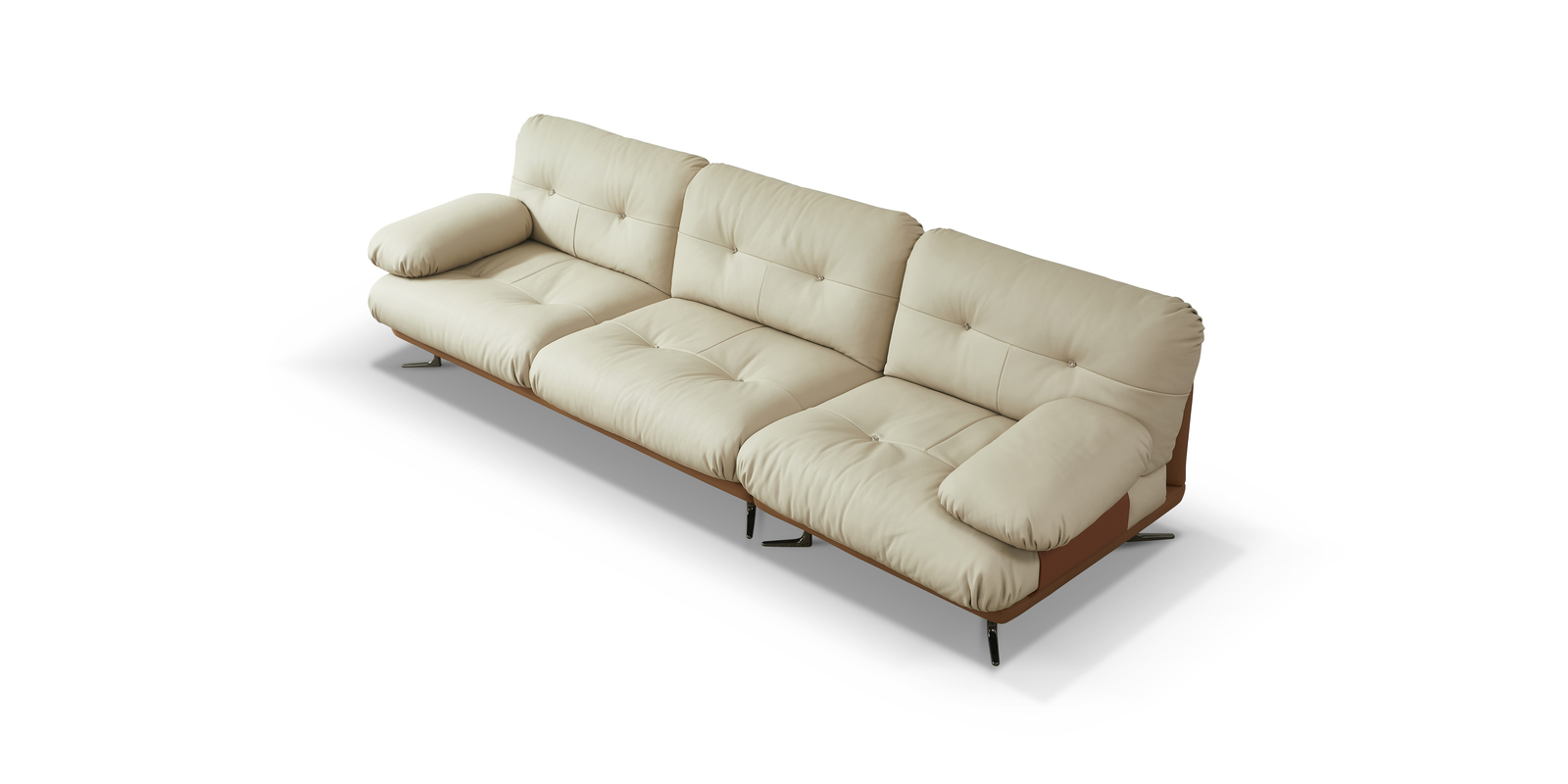
Finished sofa seat cushions. Confirm foam density and firmness through the material specification, not appearance.
For a useful comparison, request:
The density of the main seat foam.
The intended firmness or measured firmness specification, where available.
The thickness and arrangement of the cushioning layers.
Relevant fatigue or recovery test information, where available.
Rsking’s standard sofa foam specification is high-density, high-resilience foam with a density of 45 kg/m³. This is one part of the seat construction; the cushion layers and support underneath must also be considered when evaluating a particular model.
A seat cushion works as part of a larger system. Springs, webbing or other supporting structures beneath it influence how the finished seat responds to weight.
If that support becomes uneven, a cushion may sink even when changing the foam would not address the underlying cause. Upholstery guidance from the Polyurethane Foam Association also treats foam, decking, cushion wraps and cover fabrics as interacting elements. Technical reference: PFA Upholstery Guidance.
Ask the supplier to explain the proposed seat support and how it connects to the frame. Construction photographs or a section drawing can make the explanation easier to assess. A material name alone does not show the quality of the complete assembly.
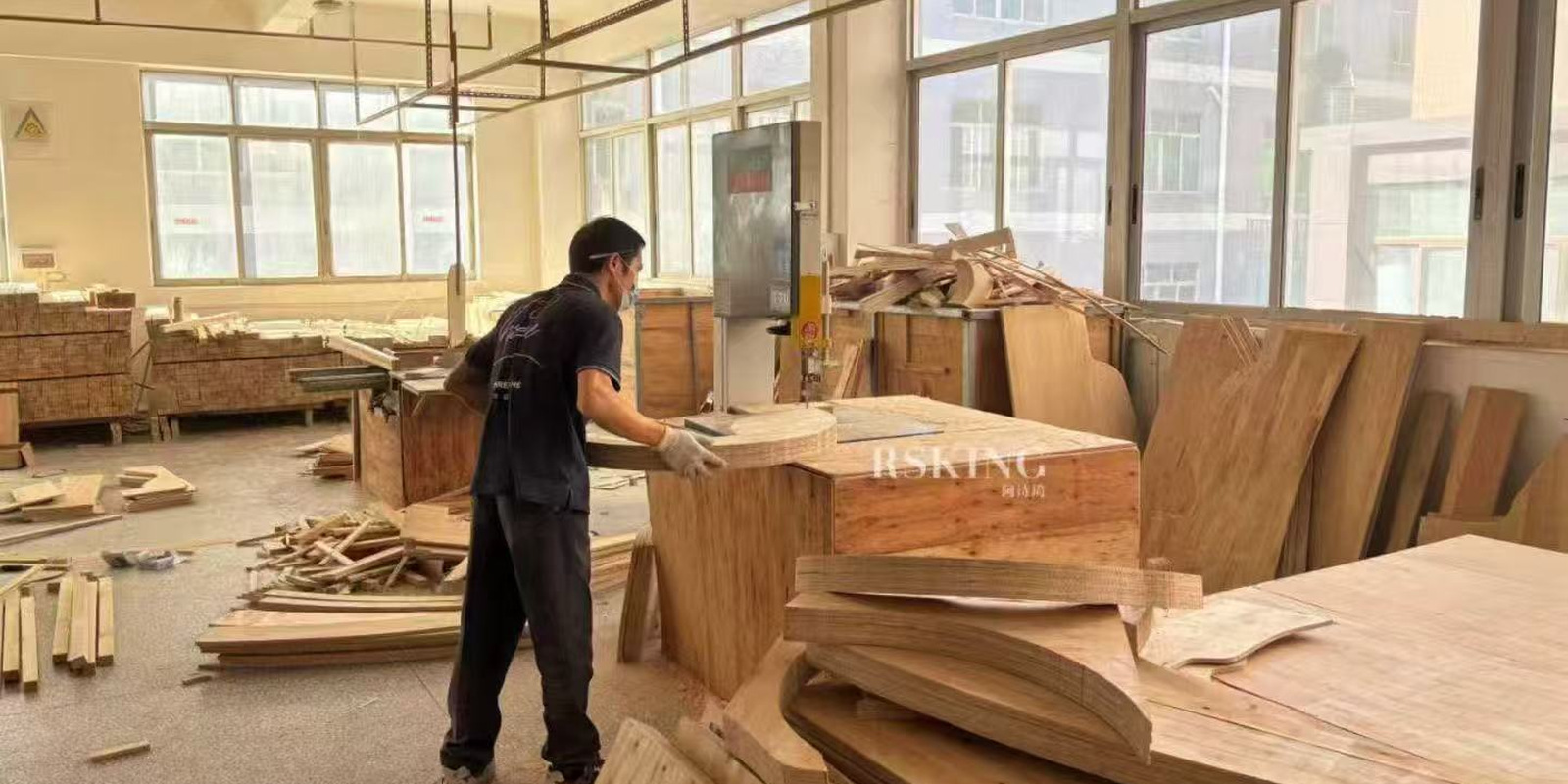
Woodworking is one stage of furniture production. The seat support and its connections should be reviewed for the selected sofa model.
Some cushions combine a supportive foam core with softer outer layers. Depending on the design, these may include fiber, feathers or down.
The outer layer affects the surface feel and appearance. Loose fillings may shift and need redistribution, while a more structured cushion may hold a tidier profile. Buyers should understand the maintenance associated with the cushion style they select.
Ask whether cushions need plumping, whether they can be rotated or flipped, and which care instructions apply. Removable cushions are not necessarily reversible, and removable covers are not necessarily washable.
A deep, relaxed sofa designed for lounging can feel very different from an upright sofa intended for conversation. Neither feel, by itself, proves better durability.
Seat depth, seat height, cushion thickness and back support all affect the experience. If a sample is available, test the complete seat in the positions its users are likely to adopt. A loose foam sample cannot reproduce the feel of the finished sofa.
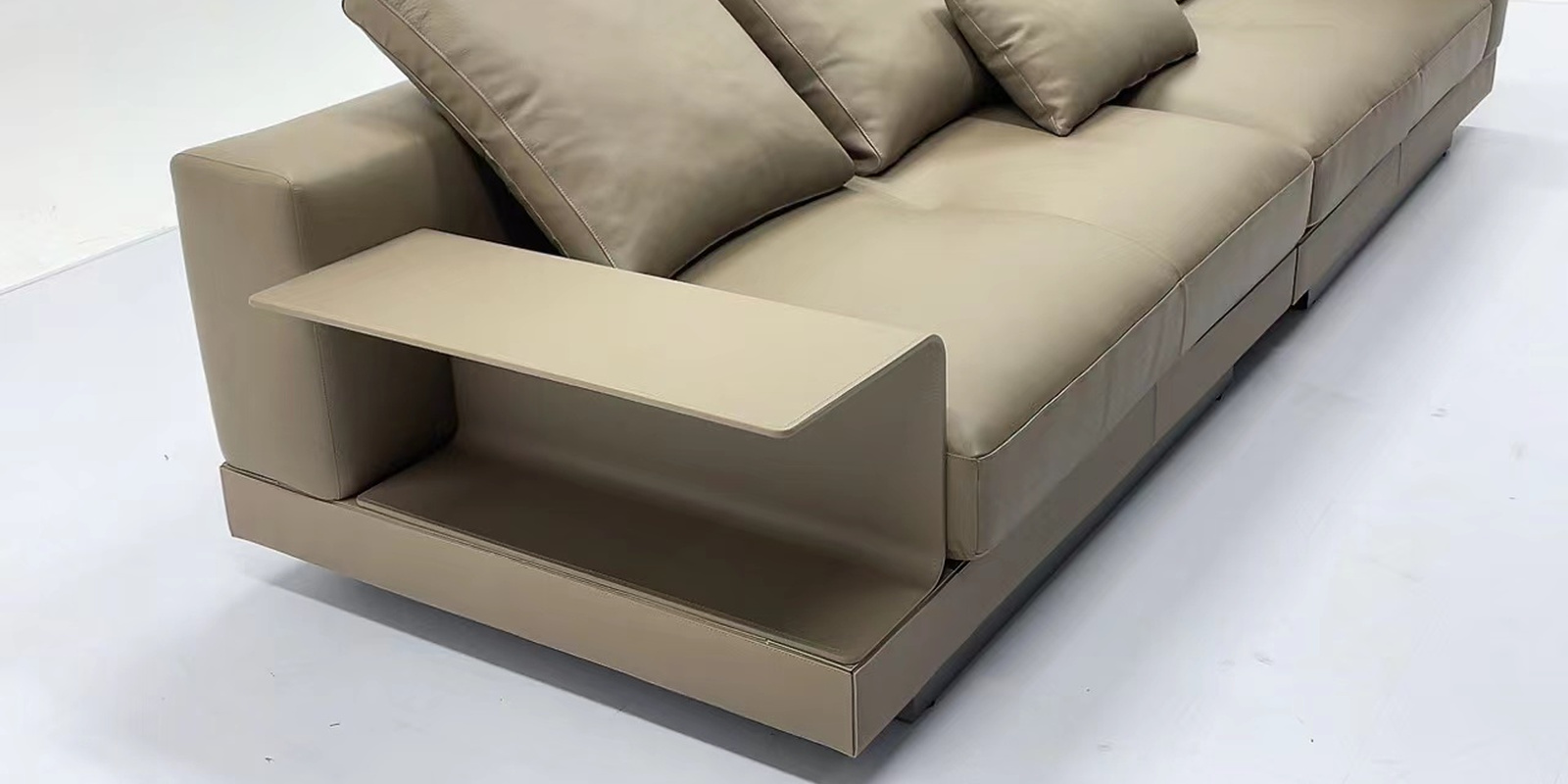
RSK2319 sofa detail showing the seat profile and back cushions. Evaluate the finished seat when discussing comfort requirements.
For a project order, describe the intended use clearly: formal seating, everyday family use, a reading area or a lounge setting. This gives the supplier a more useful brief than “make it soft but durable.”
Before approving an order, use the following questions to compare suppliers and clarify the specification.
| Item to check | Question to ask |
|---|---|
| Seat foam | What are the density and firmness specifications of the main seat core? |
| Cushion layers | What materials surround the core, and how are they arranged? |
| Seat support | What supports the cushions, and how is it attached to the frame? |
| Finished comfort | Can the proposed seat construction be evaluated in a finished sample? |
| Maintenance | Does the cushion require plumping, rotation or other regular care? |
| Serviceability | Are covers or cushion inserts replaceable, and under what conditions? |
| Warranty | How do the written terms distinguish normal softening from a covered defect? |
For larger orders, record the agreed construction and comfort requirements alongside dimensions, upholstery and quantities. If a sample is approved, make clear which specifications the production order must follow.
Leather, fabric and silhouette are important, but they tell only part of the story. A useful sofa specification also explains what is inside the cushion and what supports it.
Explore Rsking’s sofas and living room furniture with both appearance and seating requirements in mind.
For a custom furniture enquiry, share your project requirements with Rsking, including the intended use, dimensions, quantities and preferred seating feel. These details provide a practical starting point for discussing the appropriate model and construction.
No. Density and firmness describe different properties. A higher-density foam can have a soft surface feel, while a lower-density foam can feel firm. Buyers should assess both specifications.
No. Filling movement, changes in the cushion core, or problems with the support beneath the cushion can produce different forms of dipping or unevenness. The complete seat should be checked before deciding on a remedy.
Plumping can help redistribute loose fillings in cushions designed for that maintenance. It cannot repair damaged seat support or reverse permanent deterioration in a foam core.
No. Density is relevant to foam performance, but it does not establish a fixed service life. Cushion construction, support, use and maintenance also affect the finished sofa.
Sign up to stay up to date:
Write your email here..

Address : Warehouse B, 3rd Floor, Building 1, No. 2 Lianxin South Road, Sanlian Industrial Park, Wanggang Village, Longjiang Town, Shunde District, Foshan City, Guangdong Province
Office Tel : +86 757 2336 9686
Mobile / WhatsApp : +86 186 6654 8299
Email : sales@rskingfurniture.com
Copyright © RSKING All Rights Reserved