


A beige fabric can look right in a photograph and feel wrong when you touch it. A gold finish may work on its own but look too bright beside the selected wood veneer. These are easier decisions to resolve while reviewing samples than after the furniture has been made.
Before custom furniture enters production, confirm the material and finish references, where each material will be used, and the latest dimensions and configuration. Color chips help narrow the palette; upholstery swatches show texture and feel; renderings show the overall design; technical drawings define sizes and details; and physical furniture samples allow a closer review of comfort, proportions and workmanship. Each approval should identify exactly what has been accepted.
A room mood board gives useful direction, but the individual pieces still need their own specifications. For a sofa, identify the upholstery for the seat, back, outer panels and loose cushions. For a cabinet, identify the top, fronts, sides, interior and metal details. This makes mixed-material designs much easier to review.
RSKING’s Bespoke & Materials collection provides references for upholstery, stone, metal finishes and wood veneer. Use the selected name and code when discussing an option, then confirm its suitability and availability for the intended furniture. A website image is a starting point for selection; the order needs an agreed material reference.
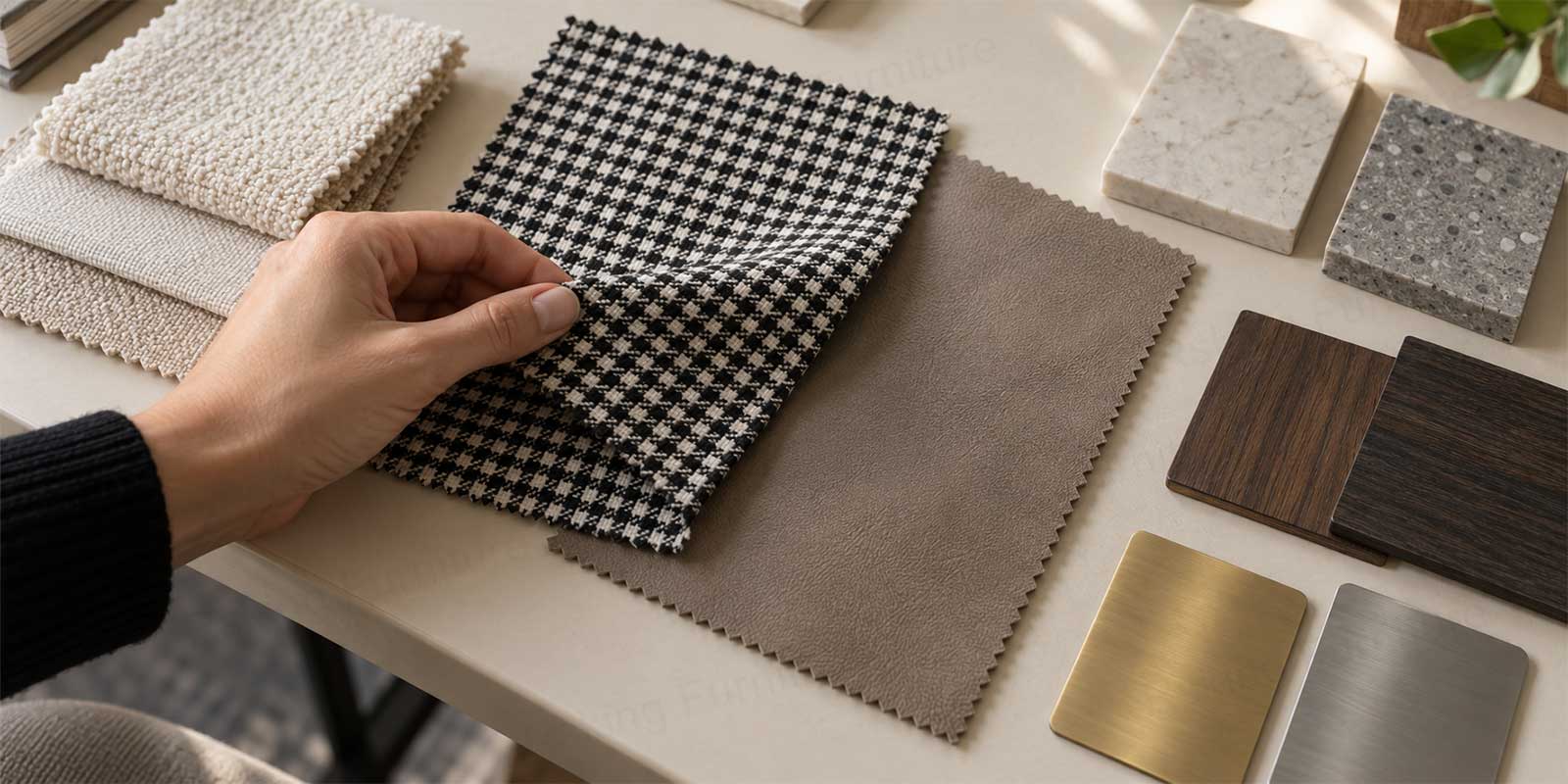
A color chip helps establish the shade. A sample of the actual finish also lets you review sheen and surface texture. When comparing lacquer or metal finishes, look at the samples beside the selected upholstery and stone, under daylight and the planned interior lighting where possible. Record the finish code as well as the color name: “gold” alone leaves room for very different results.
An upholstery swatch lets you feel the material and inspect its weave, grain or pile. Confirm whether the selection is genuine leather, synthetic leather or fabric, and record the material code and color. For patterned or directional fabrics, discuss how the pattern or pile should run across the seats, backs and adjoining modules. A larger cutting may be useful when a small swatch does not show the full pattern.
Also identify the surfaces covered by that selection. A leather swatch does not establish whether the same leather will cover the entire sofa, and a fabric swatch does not confirm cushion firmness. If the project has specific upholstery performance requirements, provide them during selection and ask what supporting information is available for the exact material.
Natural stone and wood veneer vary in tone and pattern. A sample can establish the general appearance, but it cannot show every vein across a dining tabletop or the grain arrangement across a long cabinet. RSKING’s material guidance acknowledges these natural variations.
If the placement of stone veining is important, ask whether photographs of the proposed slab and a cutting layout can be reviewed before cutting. For veneer, discuss grain direction and whether adjacent doors or panels need a coordinated pattern. Confirm what can be selected for the order rather than expecting every finished surface to reproduce a small sample exactly.
Keep the surface finish in the same discussion. A stone sample should be linked to the specified finish, thickness and edge detail. A veneer reference should identify the intended stain and sheen. Approving the material name alone leaves these visible details unresolved.
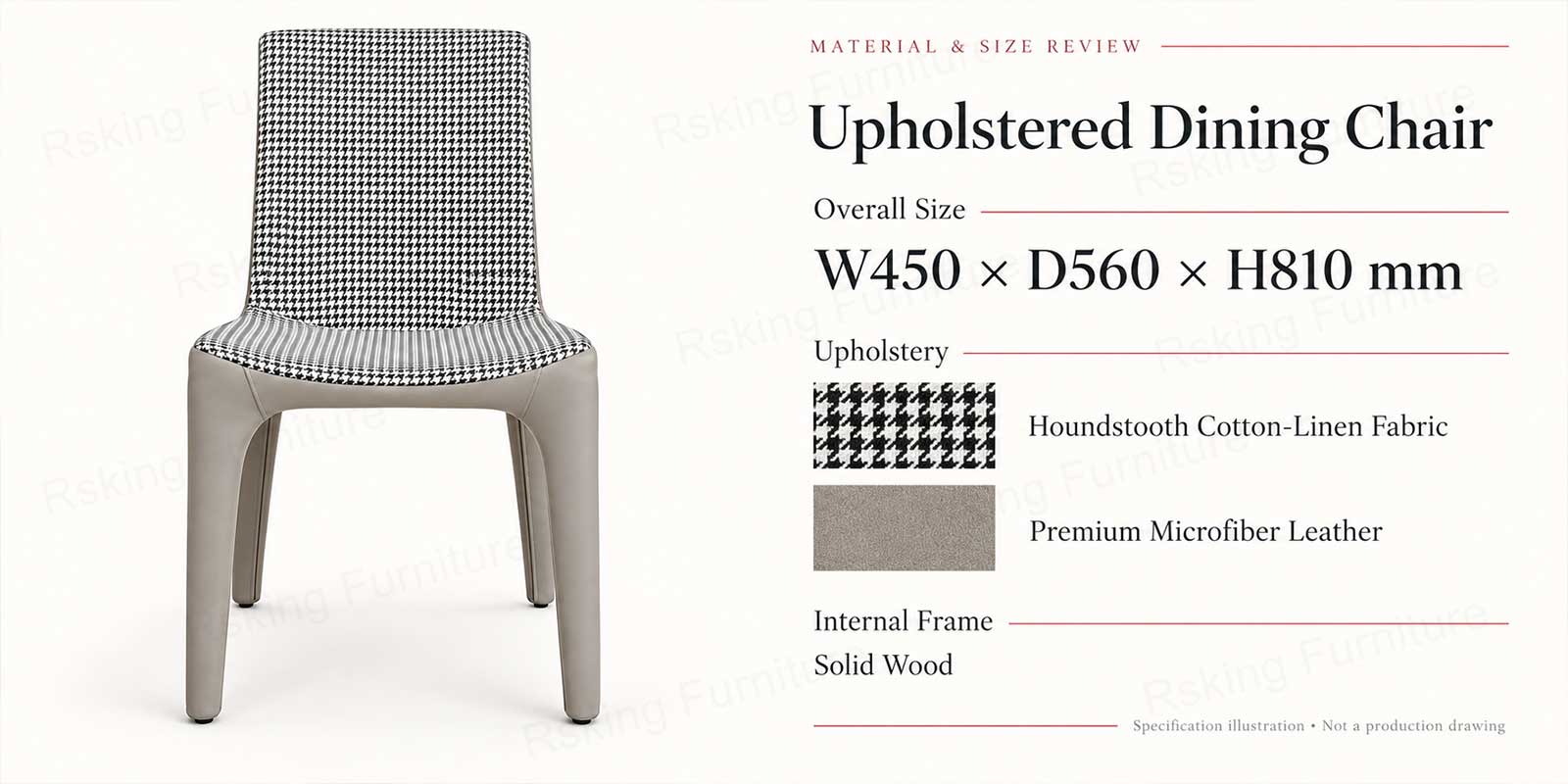
RSKING’s in-house 3D visualization supports design review before production. A rendering helps buyers assess the furniture’s proportions, material combinations and relationship to the room. It is useful for discussing the overall appearance, particularly when several finishes need to work together.
Rendered color depends on lighting, texture settings and the screen used to view it. Keep the approved physical sample as the reference for material color and feel. If the rendering shows the correct shape but an approximate fabric color, record that distinction when approving it.
Technical drawings should resolve the dimensions and construction details relevant to the order. For a modular sofa, check the module arrangement and chaise position on a labelled plan rather than relying only on “left” or “right.” For an upholstered bed, distinguish the mattress size from the frame’s outer dimensions. For a cabinet, check storage divisions, openings and any required cable access.
Use a drawing number, revision and date in the approval record. If a dimension changes after a rendering has been approved, ask for the affected documents to be brought into agreement. A production decision should not depend on which version someone happens to open.
A physical furniture sample allows checks that material swatches and drawings cannot provide on their own. For seating, these include seat depth, cushion response, back support and ease of getting up. For cabinetry, they may include door operation, drawer access, joints and the appearance of adjoining finishes.
RSKING’s manufacturing and prototyping capabilities support product development. Discuss whether the project calls for a material sample, a sample of a particular detail or a complete furniture prototype. A new design or repeated project order may benefit from a full sample; a confirmed existing model with a finish change may need a more limited review.
Agree on the sample’s purpose before it is made. Identify what will be checked, who will approve it, and whether review will take place in person or remotely. Confirm sample charges, shipping, revisions and timing separately. Photographs and video can document appearance and operation, but they cannot fully communicate seating comfort or how a surface feels.
A project can accumulate revised drawings, sample photographs and short approvals across several conversations. Before production, bring the final decisions together so the buyer and manufacturer are working from the same references. A practical approval record should include:
Furniture identification: Model or item number, room reference and quantity for each specification.
Dimensions and configuration: The approved drawing revision, overall sizes and module or storage layout.
Materials and finishes: Codes, sample references, colors, sheen and the surfaces where each selection applies.
Sample decisions: What was reviewed, what was accepted and any corrections still required.
Approval details: The authorized approver, date and any items that remain on hold.
For example, “fabric approved” is incomplete if the ottomans use another material or the back cushions are still undecided. Name the approved sample and the parts it covers. Where physical reference samples are retained, use matching labels so they can be connected to the written specification.
If a material, dimension or finish changes later, request written confirmation of the revised specification and any effect on cost or timing. Our guide to what affects custom furniture costs explains why these changes can alter a quotation.
To discuss a project with RSKING, send the furniture list, dimensions or drawings, preferred material references and required delivery date through Contact & Inquiry. Identify which choices are confirmed and which still need samples or technical review. This gives the team a clear starting point for discussing the next approval steps.
A photograph is useful for shortlisting and discussing appearance. Lighting, exposure and screen settings can change the displayed color, so a physical reference is preferable when shade, texture or sheen is important. If approval must be remote, identify the sample code and record the limits of the photographic review.
No single sample arrangement suits every order. The decision depends on whether the design is established, what is changing and which details need to be checked. Agree on the appropriate sample scope, costs and timing before proceeding.
Ask for the difference to be resolved before approving the affected item for production. The final record should identify the drawing that controls dimensions, the sample that controls the material or finish, and any agreed exceptions. Replace outdated references so the intended result is clear.
Sign up to stay up to date:
Write your email here..
FOLLOW US
On RSKING's social channels


Address : Warehouse B, 3rd Floor, Building 1, No. 2 Lianxin South Road, Sanlian Industrial Park, Wanggang Village, Longjiang Town, Shunde District, Foshan City, Guangdong Province
Office Tel : +86 757 2336 9686
Mobile / WhatsApp : +86 186 6654 8299
Email : sales@rskingfurniture.com
Copyright © RSKING All Rights Reserved


