


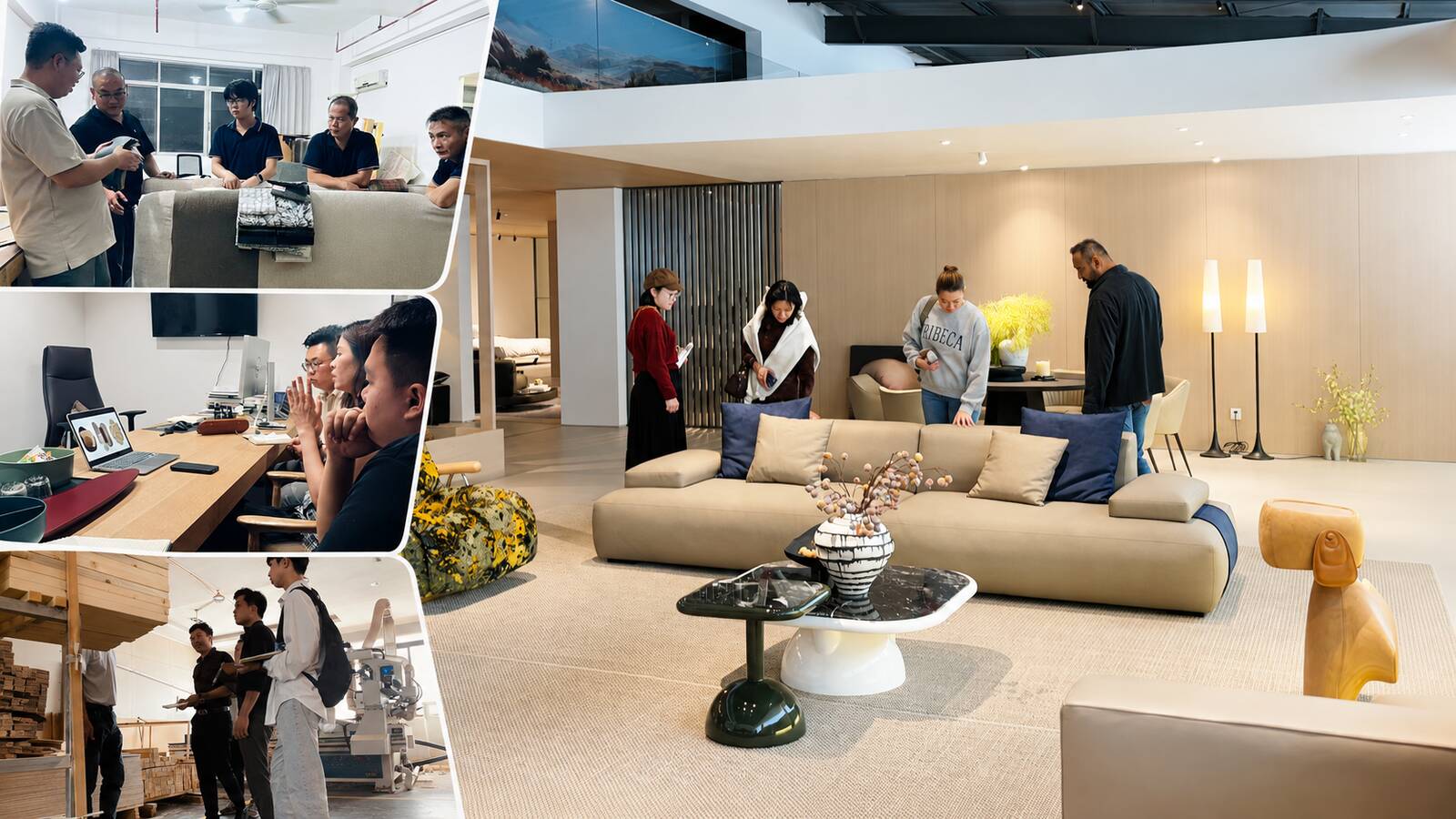
A custom sectional sofa should be specified as a complete seating system, not chosen from a product image alone. The room, module sequence, orientation, dimensions, upholstery, internal construction and delivery route all need to work together.
For designers, furniture retailers and villa or apartment project buyers, a clear specification reduces configuration errors, material disputes and installation delays. Buyers can also explore RSKING’s Living Room Furniture collection for additional sofa configurations and material options.
Unlike a fixed three-seat sofa, a custom sectional sofa can change direction, grow by module and respond to a specific room. That flexibility is valuable, but it also means every decision affects the next one. A deeper seat changes the footprint; a wider arm changes the overall length; a longer chaise can change circulation and delivery access.
Quick answer: Start with a dimensioned floor plan. Select the layout, define left and right from an approved viewing direction, build the module sequence, confirm assembled and module dimensions, approve materials and samples, and sign off the production drawing before manufacturing.
1. Match the Sectional Layout to the Room
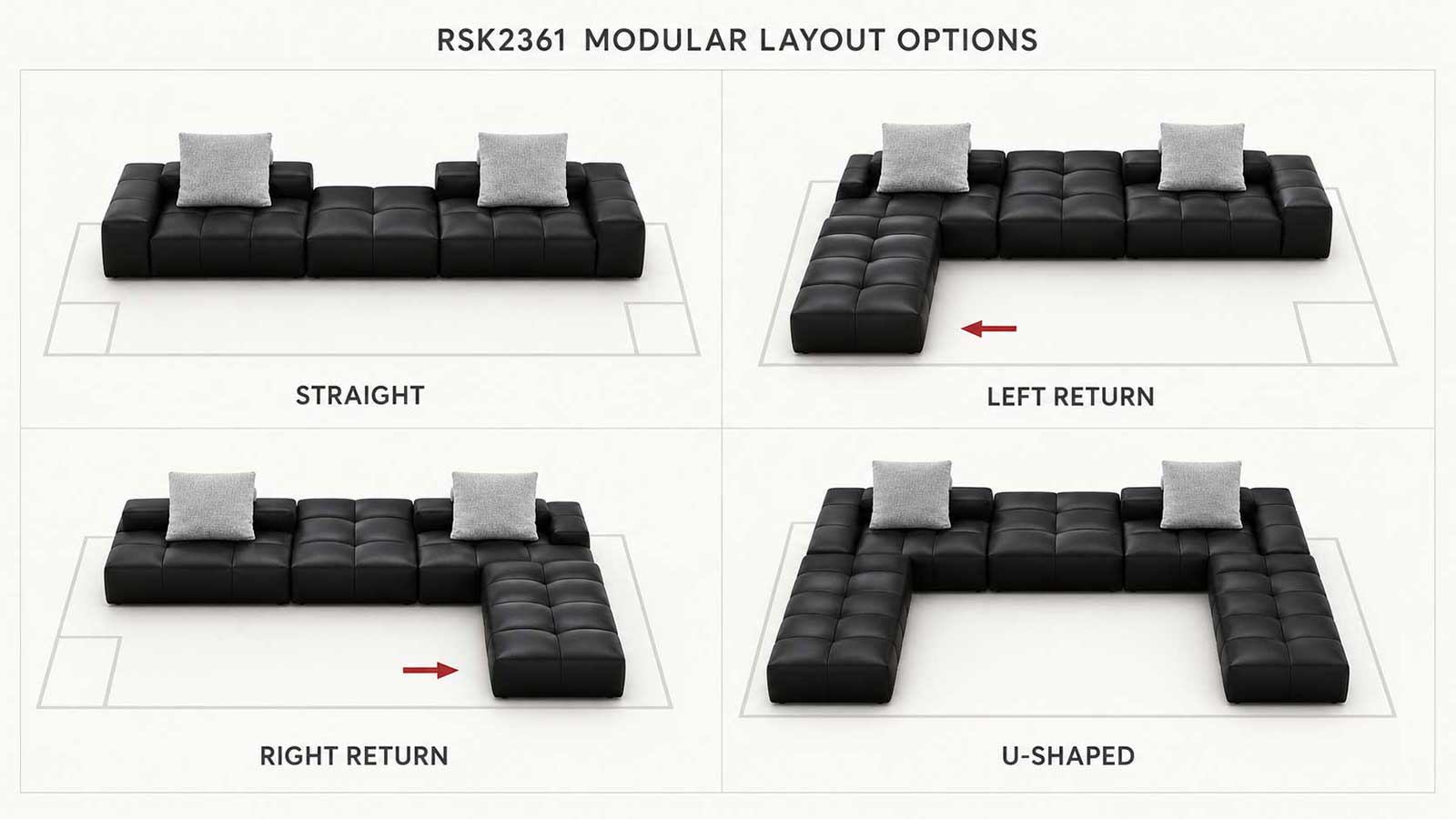
A successful custom sectional begins with the room rather than the sofa photograph. Record wall lengths, doors, windows, columns, focal points, side tables, floor outlets and main circulation routes. The plan should also show the intended viewing direction so that everyone reads the arrangement in the same way.
Scale matters as much as shape. A generous U-shaped arrangement may suit a villa lounge but overpower an apartment living room. Conversely, a compact L-shaped layout can look undersized in a large hospitality-style space. Before fixing the sofa footprint, check the relationship between the seats, coffee table, media wall and the routes people actually use.
The most common configurations are:
| Layout | Typical Application | Details to Confirm |
|---|---|---|
Straight modular | Apartments, media rooms and flexible retail collections | Total width, arm positions and seat sequence |
L-shaped | Villas, corners and open-plan living rooms | Return side, return depth and circulation |
Sectional with chaise | Residential lounges and relaxed seating areas | Chaise side, length and usable seat width |
U-shaped | Large family rooms and conversation areas | Both return lengths and center opening |
Curved or mixed | Statement interiors and design-led projects | Radius, joints and module compatibility |
Orientation needs particular care. “Left-facing” can mean different things to different suppliers. On every approved plan, identify the front of the sofa, mark each left-arm and right-arm unit, add module codes and show the order of assembly. A simple arrow labelled “viewed from front” can prevent an expensive mirrored configuration.
When buyers want to customize sectional layouts, they should send a floor plan or verified site dimensions rather than relying on a reference photo. A custom sectional couch can define zones in an open-plan room, but the return must not block doors, balconies or primary walkways.
2. Build the Module Combination and Confirm Dimensions
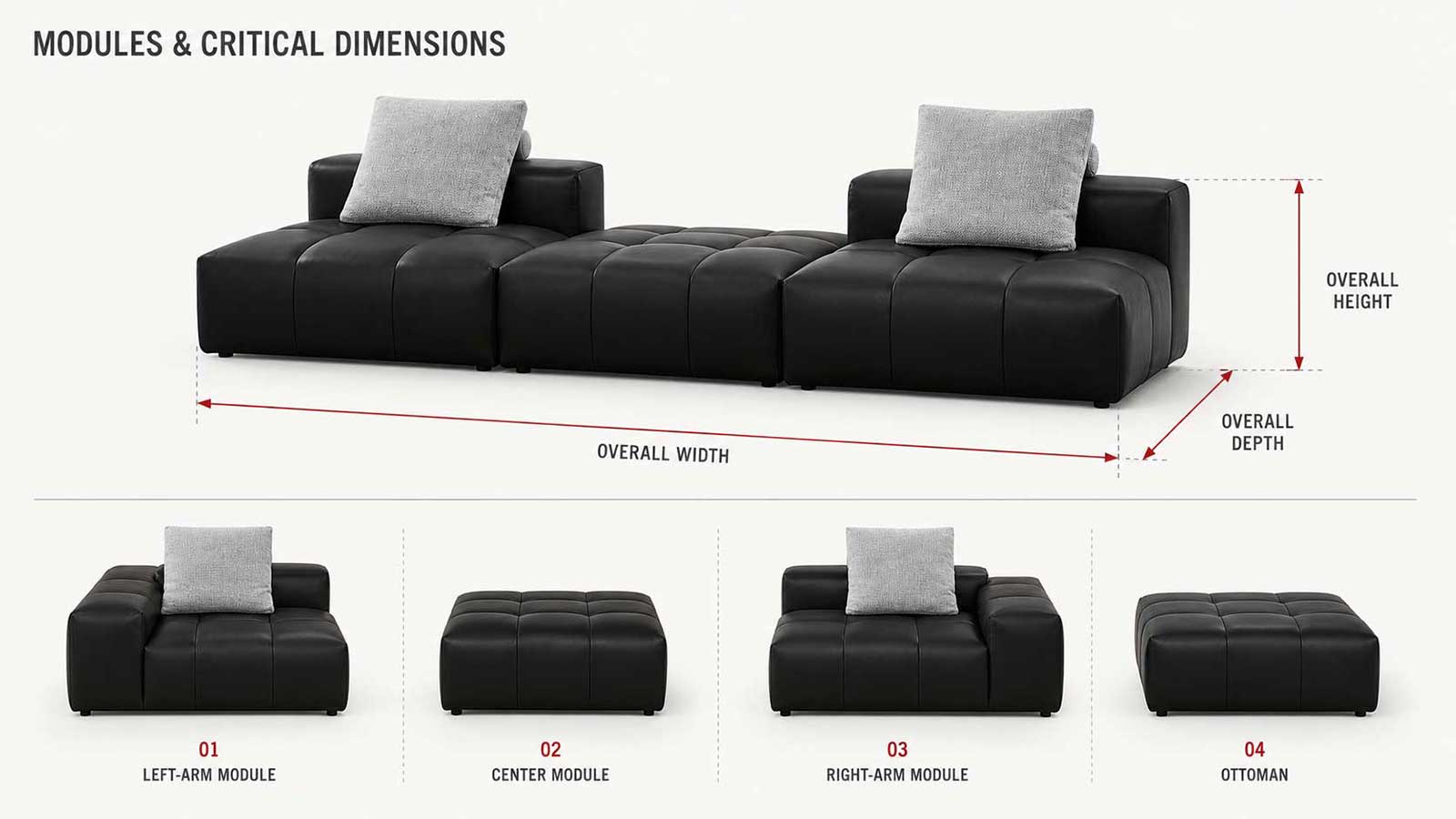
A sectional is manufactured and delivered as individual modules, so the specification must show more than the overall footprint. A typical combination may include a left-arm unit, armless center seats, a right-arm unit, corner module, chaise, open-end terminal or ottoman.
Confirm these measurements in millimetres:
Overall assembled width, depth and height
Width, depth and height of every individual module
Seat height and usable seat depth
Arm height and arm width
Back height, chaise length and corner depth
Leg height, connector position and floor clearance
Overall dimensions help the designer plan the room; module dimensions help the contractor verify access and help the factory control production. Both are necessary. For retail programs, consistent module rules also make it easier to create repeatable combinations without redesigning every order.
Ask the manufacturer to distinguish nominal dimensions from final approved dimensions. Soft upholstery can create small visual variations, while adjustable backs or loose cushions may extend beyond the structural footprint in use. A custom sectional sofa drawing should therefore state how each dimension is measured and whether movable components are shown in their normal or extended position.
Verified Module Example: RSK13
The RSK13 modular sofa shows how a verified module schedule should be presented:
| Configuration | Verified Size |
|---|---|
| Complete set | 3250 × 1150 × 840 mm |
| Left module | 1200 × 1150 × 840 mm |
| Center module | 850 × 1150 × 840 mm |
| Right module | 1200 × 1150 × 840 mm |
These figures apply to this confirmed RSK13 configuration. Other custom sectional sofas should use their own approved drawings because styling changes, adjustable backs, arms and upholstery details can alter the final size.
3. Specify Upholstery, Foam and Internal Construction
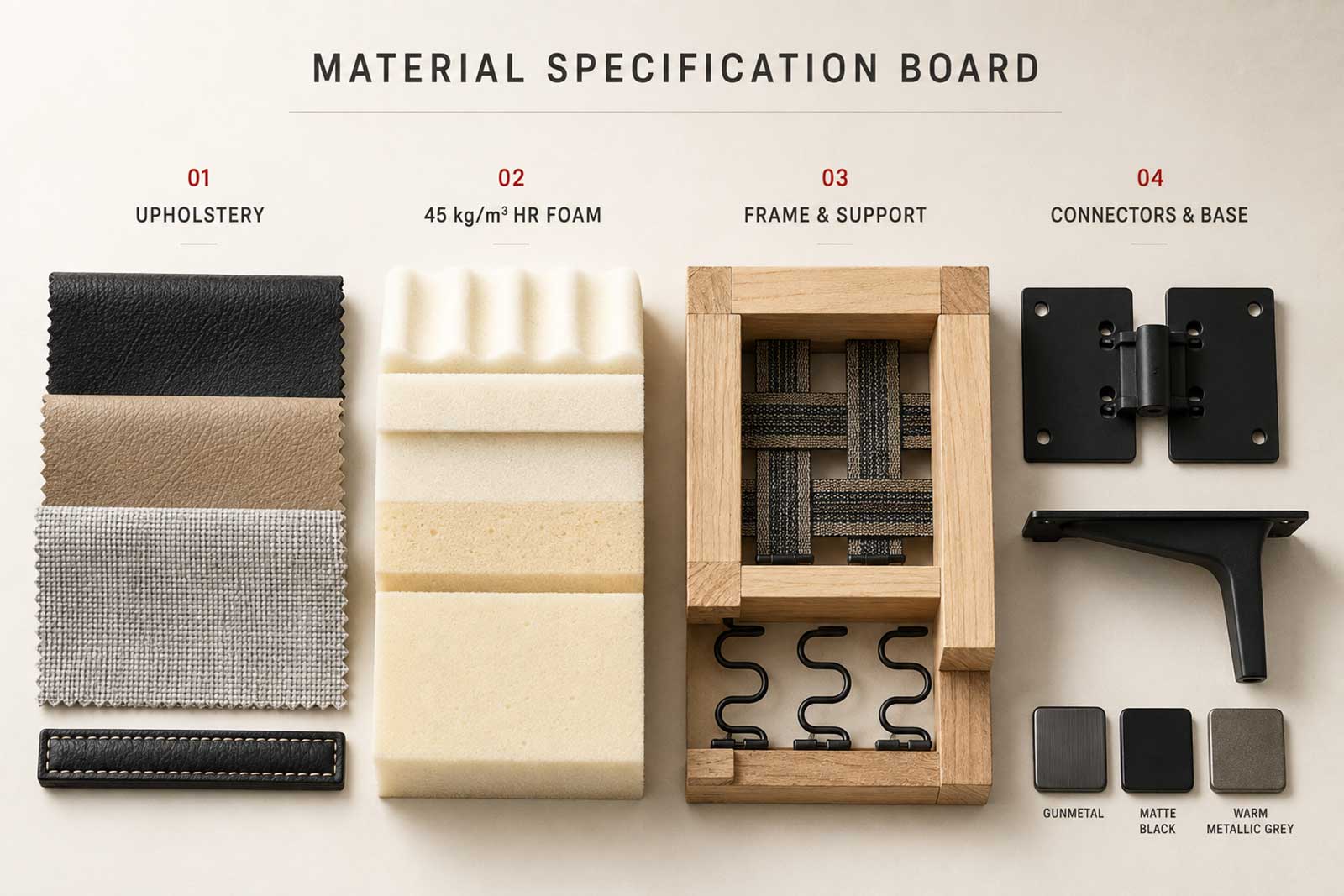
Material descriptions should be measurable and reviewable. “Premium leather” or “high-density foam” is not enough for a project specification because the buyer and manufacturer may interpret those phrases differently.
| Component | Information to Confirm |
|---|---|
| Upholstery | Material type, grade, colour code, finish, backing and application area |
| Cushioning | Foam density, resilience, layer structure and intended comfort |
| Frame and support | Frame material, reinforced areas, webbing or spring system |
| Base and connectors | Leg finish, floor protection, connector type and installation method |
For RSK13, the standard specification uses semi-leather, with imported Italian top-grain leather on the main contact surfaces. Full leather and alternative colours can be developed as options. Where applicable, RSKING uses 45 kg/m³ Density, High-Resilience Foam to support a stable seating feel and recovery performance.
Foam density alone does not define comfort. Seat depth, foam layering, webbing, spring support and back-cushion construction also influence how the sofa feels. Buyers should approve physical swatches for colour, grain and hand feel under the intended lighting. For larger programs, a sealed reference sample helps maintain consistency across repeat orders.
Use the same material codes in the quotation, sample record and production drawing. On a custom sectional sofa, several modules meet in one continuous composition, so a colour or grain difference can be more visible than it would be on separate chairs. Batch planning and clear upholstery zoning are especially important for leather and directional fabrics.
4. Approve Production Drawings and Samples
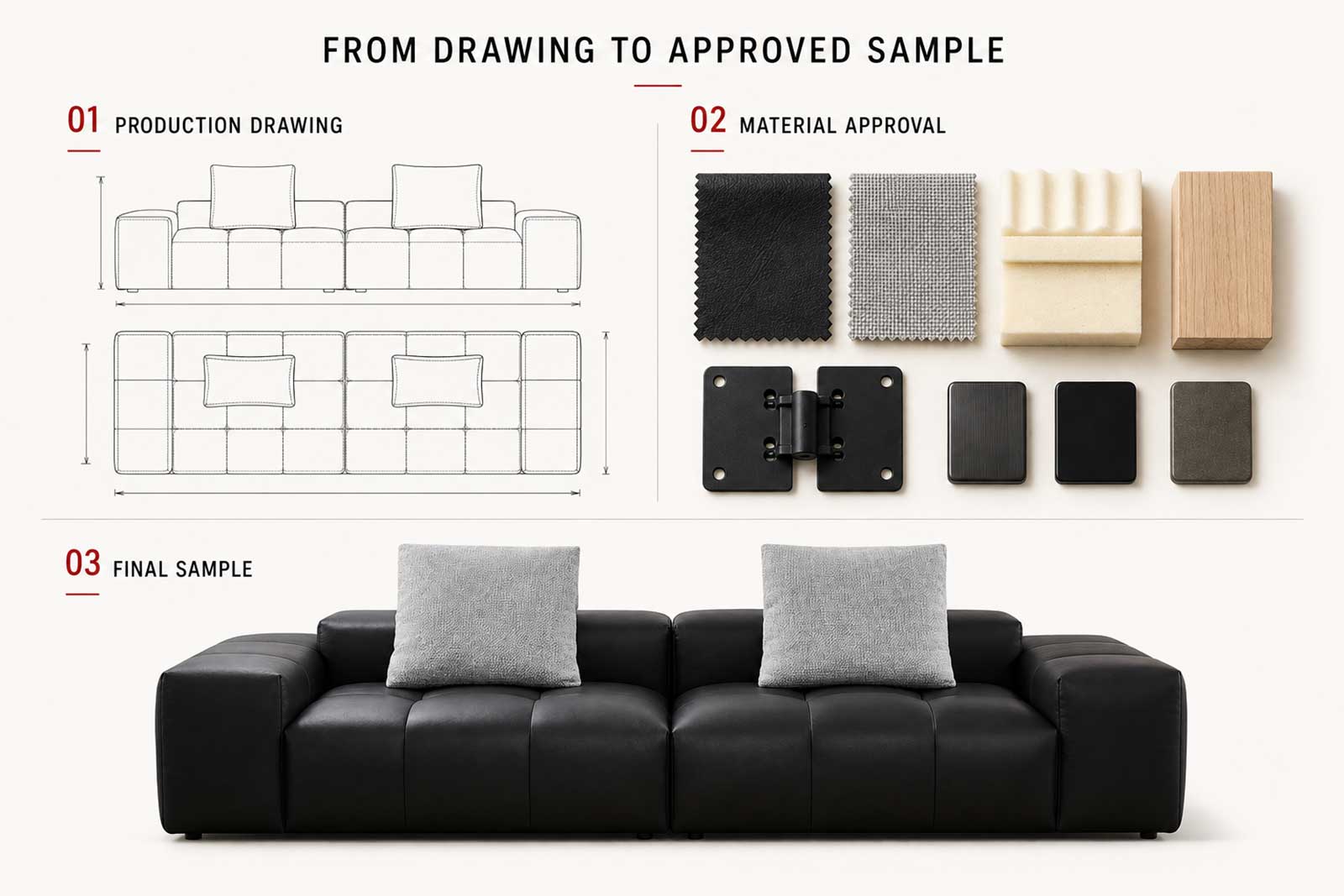
A production drawing converts design intent into manufacturing instructions. It should be approved before bulk production, especially when the order includes unusual proportions, mixed modules or project-specific finishes.
The drawing should show:
Front, side and plan views
Overall and individual module dimensions
Module sequence, orientation and identification codes
Arm, back, chaise and connector details
Upholstery zones, seams and visible stitch lines
Approved material references and revision number
3D visualization can help designers review scale and composition, but it should support rather than replace a dimensioned production drawing. For a new custom sectional furniture program, the safest approval path is drawing, material sample, prototype or pre-production sample, and then bulk manufacturing.
Keep approvals traceable. Each drawing should carry a model number, date and revision. If the buyer changes the chaise side, arm width or upholstery after sample review, the updated document should replace the earlier version before the custom sectional sofa enters production.
During sample review, check more than appearance. Sit in each position, test the module connectors, compare the finished size with the drawing, inspect seam alignment and confirm that the backs and arms meet consistently. Record approved changes in a revised document; comments scattered across messages are difficult to control on the factory floor.
5. Check Delivery, Installation and Project Requirements
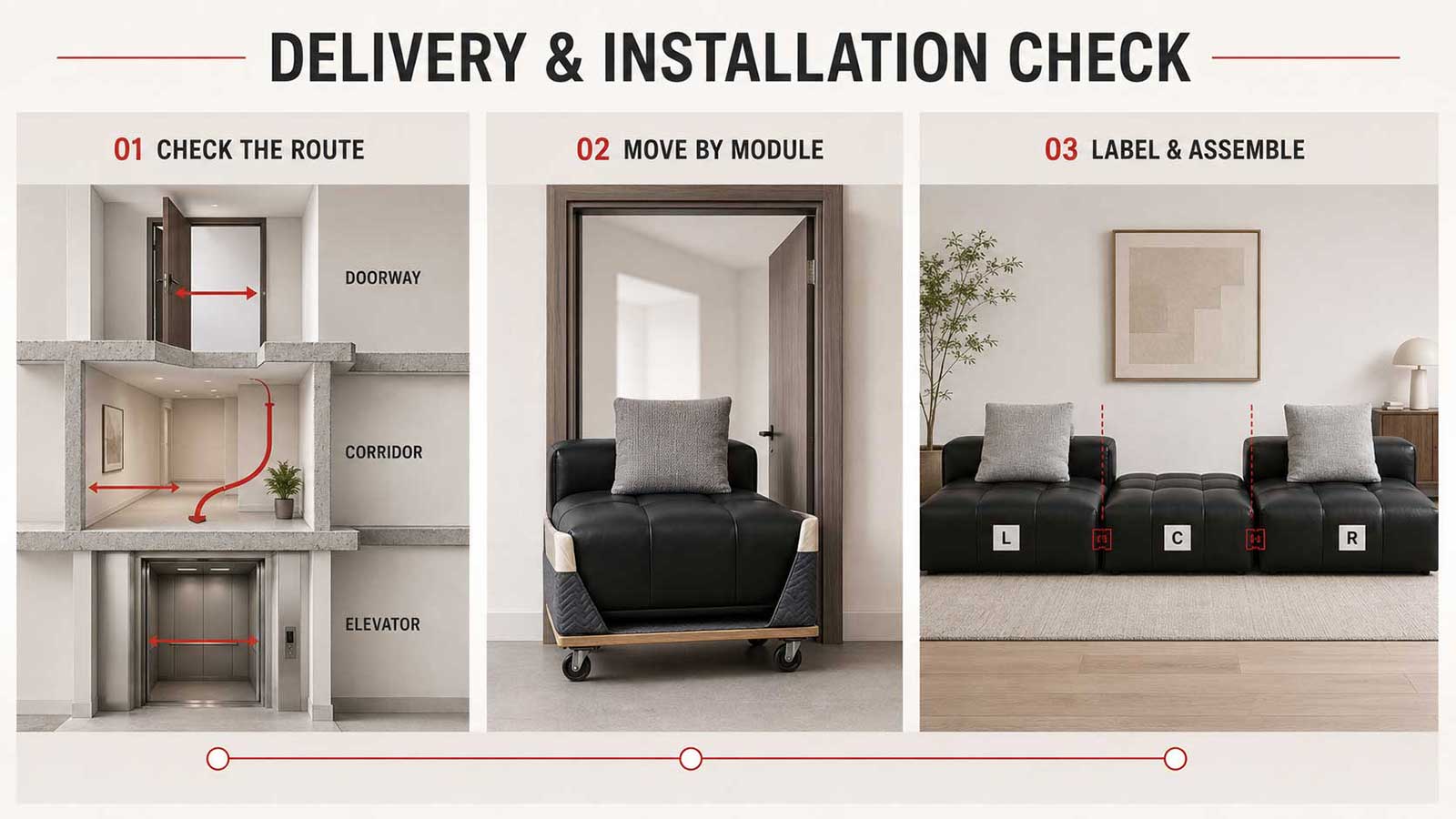
Even a correctly sized sofa can fail at installation if its modules cannot reach the room. Before approving production, compare the largest packed module with the full delivery route: loading area, lift, stairs, corridors, corners, doors and final assembly space.
Clarify whether legs can be removed, backs can be detached, connectors require tools and packaging can be opened before the tightest access point. For apartments and villas with restricted access, smaller modules may be more practical than one oversized unit.
For project orders, packaging labels should match the room schedule and module plan. A clear label can identify the project, floor, room, model, module code and orientation. This reduces sorting time on site and helps installers assemble the correct custom sectional in the correct location.
| Buyer | Primary Specification Priority |
|---|---|
| Interior designer | Proportion, colour, sight lines and coordination with the room |
| Furniture retailer | Repeatable modules, clear options, packaging and reorder consistency |
| Villa or apartment buyer | Site fit, comfort, access and installation sequence |
| Project contractor | Approved schedule, labelling, delivery phases and site coordination |
The most common mistakes are mirrored orientation, checking only the assembled size, leaving upholstery codes unconfirmed, approving from renderings alone, ignoring the delivery route and changing details without revising the drawing. These risks affect both one-off projects and repeat orders of custom sectional couches.
6. Follow a Controlled Development Process with RSKING
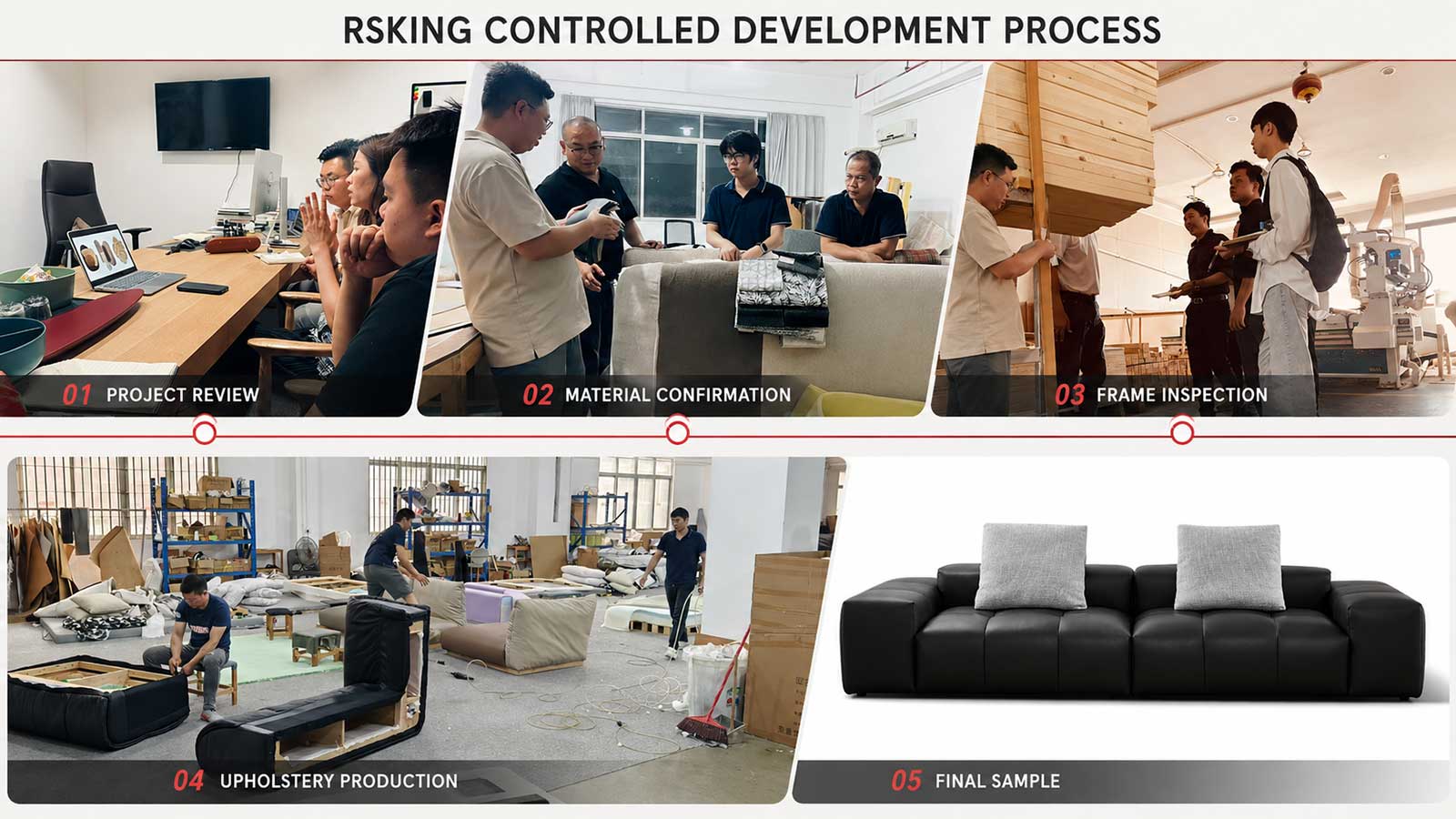
A practical custom sofa development process keeps creative decisions and factory instructions aligned:
Send the brief: floor plan, reference images, target quantity, market, budget range and required date.
Confirm the layout: select the configuration and define the viewing direction.
Fix the modules: agree on module codes, sequence and individual dimensions.
Review materials: approve upholstery, foam, finish and visible details.
Approve documents: sign off the 3D view and dimensioned production drawing.
Confirm the sample: evaluate size, comfort, construction and workmanship when a sample is required.
Control production: use the approved reference for QC, module labelling, packaging and shipment.
RSKING supports designers, retailers and project buyers with configuration development, verified module schedules, 3D visualization, material confirmation, sample review and production drawings. During manufacturing, the approved specification becomes the reference for upholstery, assembly, QC and packaging.
This controlled approach is useful whether the buyer is developing one site-specific custom sectional sofa or a repeatable collection of custom sectional sofas. It gives both sides one clear version of what must be made.
Frequently Asked Questions
What information should I send to request a custom sectional sofa?
Send the floor plan or site dimensions, preferred layout, reference images, quantity, target materials, destination, budget range and required delivery date. Include access restrictions if the project is already known.
How do I confirm whether a sectional is left-hand or right-hand?
Do not rely on wording alone. Use a plan view that marks the front of the sofa, the left and right modules, the return or chaise, and the viewing direction.
Can a manufacturer customize sectional dimensions?
Yes, dimensions can often be adjusted, but one change may affect comfort, visual proportion, frame construction, material usage and packaging. The final measurements should be reviewed in a production drawing.
Which dimensions matter most for a custom sectional couch?
Confirm the assembled footprint, each module size, seat height, usable seat depth, arm height, back height and chaise length. Module size is also essential for delivery access.
Which upholstery options are available?
Options may include fabric, leather, semi-leather and performance materials. Availability depends on the design and order. Approve exact codes and physical samples rather than a generic colour name.
Is 45 kg/m³ high-resilience foam suitable for sectional seating?
Where applicable, 45 kg/m³ Density, High-Resilience Foam can provide stable support and recovery. Final comfort also depends on foam layers, seat geometry and the suspension system.
Are production drawings necessary before manufacturing?
Yes. For a custom order, drawings establish the dimensions, orientation, module sequence, materials and construction details that the buyer and factory have approved.
Final takeaway: The best sectional is not simply the one that looks right in a photograph. It is the one whose room plan, modules, materials, comfort, access and production documents have all been confirmed. Start with the space, approve the details and keep one controlled specification through production.
To review a sectional sofa project, send RSKING your floor plan, module requirements and material direction through the project inquiry page.


